Termite control in New Orleans requires methods calibrated to coastal alluvial soil, exceptionally high water tables, and nineteenth-century construction. Formosan subterranean termites, introduced through the Port of…
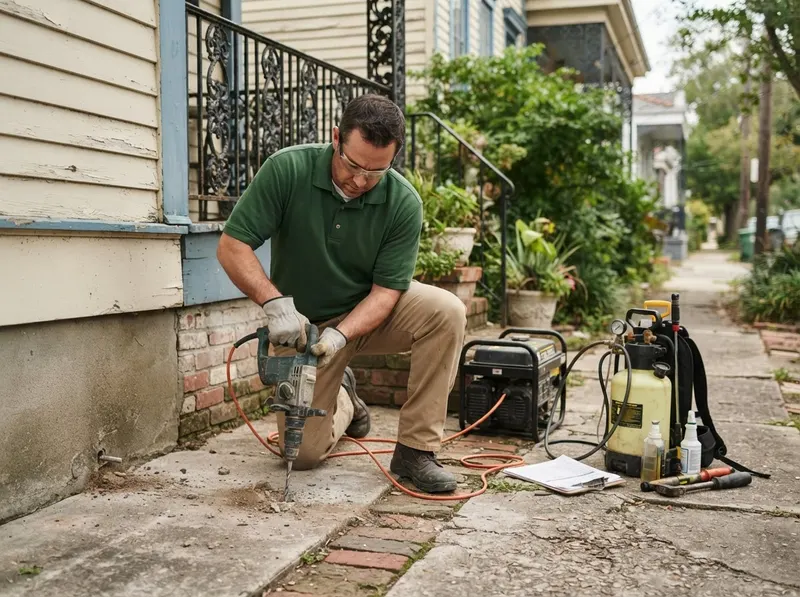
Termite control in New Orleans requires methods calibrated to coastal alluvial soil, exceptionally high water tables, and nineteenth-century construction. Formosan subterranean termites, introduced through the Port of New Orleans post-World War II, establish carton nests inside wall cavities that survive independently of soil contact if structural moisture is present. A standard soil injection adequate for suburban slab homes fails when applied blindly around a raised center-hall cottage in the Garden District or a timber-framed double in Mid-City. Mud tubes constructed across brick foundation piers must be traced directly to entry points along heart-pine sills and virgin bald cypress framing, ensuring non-repellent termiticides eliminate the colony rather than merely diverting workers into interior lathe and plaster.
Treatment selection separates into two primary methodologies: low-impact exterior baiting networks and non-repellent liquid soil barriers. Exterior bait stations installed every 10 to 15 linear feet around a perimeter provide active monitoring and intercept foraging subterranean workers before they scale brick piers, making them ideal for zero-lot-line properties in the French Quarter or the Marigny where paved courtyards prevent soil trenching. In contrast, deep perimeter liquid trenching using termiticides like fipronil creates an immediate continuous boundary in accessible earth found in Carrollton, Lakeview, and Gentilly. Liquid barriers deliver immediate continuous soil exclusion, while bait systems eliminate parent colonies through chitin synthesis inhibitors without drilling historic flagstone or antique brick pavers.
Structural realities in Orleans Parish dictate clear trade-offs between chemical disturbance and protective longevity. Drilling original masonry or decorative tile to reach soil underneath slabs risks cracking irreplaceable materials. For historic properties along Uptown avenues and Algiers Point, preservation protocols prioritize installing low-profile hex-cap monitoring stations flush with turf, combined with targeted crawlspace foaming of structural timbers using disodium octaborate tetrahydrate. This dual method isolates framing timbers from infestation while leaving the 100-year-old architectural elements completely intact.
Every job gets a firm, written price after a free on-site visit.
Tell us about your termite control job in New Orleans and we'll send a clear, written quote, usually the same day.
 Magnolia Heron Pest Control