Orleans Parish architecture creates specific operational challenges for insect control. The historic framing of double-shotgun houses in the Bywater, Carrollton, and Marigny features tongue-and-groove heart pine, tall…
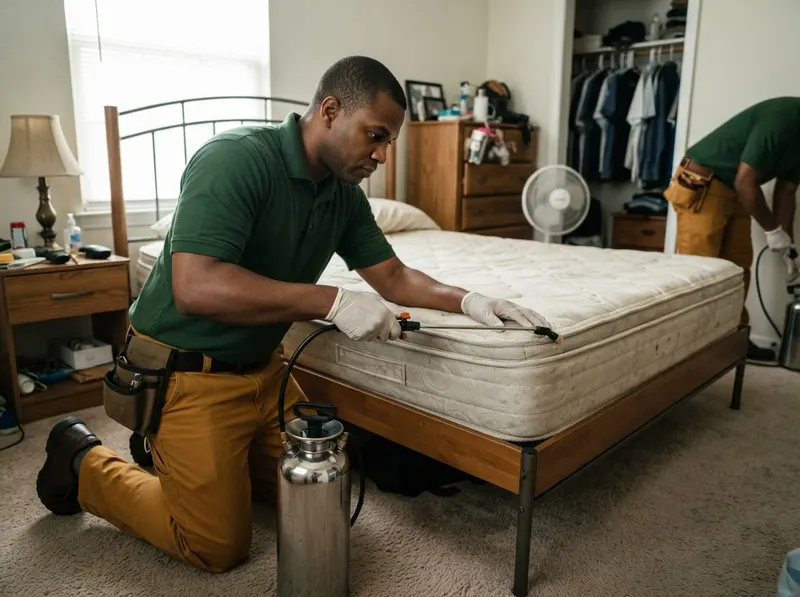
Orleans Parish architecture creates specific operational challenges for insect control. The historic framing of double-shotgun houses in the Bywater, Carrollton, and Marigny features tongue-and-groove heart pine, tall plaster walls, and continuous baseboards that offer harborages directly into adjoining living spaces. Shared party walls in French Quarter masonry rowhouses permit bed bug nymphs to migrate between units via electrical conduits and plumbing chases. Standard ambient heat treatments can warp original cypress doors or crack historic horsehair plaster. Remediation strategies must therefore employ high-temperature targeted dry steam (180°F at the nozzle) along mattress seams, floorboard gaps, and picture molding, combined with amorphous silica dust in electrical switch plates, preventing transfer while preserving century-old architectural fabric.
Treatment selection balances immediate thermal knockdown against residual protection. High-heat applications neutralize all life stages instantly, including eggs that resist chemical sprays, but offer zero residual barrier against reintroduction from visiting luggage or shared building corridors. Microencapsulated insect growth regulators and botanical contact sprays provide three to six months of active protection, yet require 10 to 14 days to break the reproduction cycle completely. In raised basement homes across Uptown, Mid-City, and the Garden District, humidity levels routinely exceed 75%, which can degrade low-grade pesticide formulations; specialized structural dusts and humidity-tolerant compounds maintain stability inside hollow wall cavities.
Preparing a home requires exact mechanical staging rather than chemical-only intervention. Homeowners wash and dry all bedding, draperies, and washable textiles at 120°F for a minimum of 30 minutes, followed by airtight storage in sealed polypropylene bins. Furniture must be moved 2 feet away from perimeter walls to expose tongue-and-groove joints and subfloor seams. Unlike standard flea or roach issues, bed bug colonies do not originate outdoors or beneath pier-and-beam crawlspaces; they are introduced exclusively through human transit, salvaged antique furnishings, or hospitality traffic, necessitating strict structural containment during eradication.
Every job gets a firm, written price after a free on-site visit.
Tell us about your bed bug control job in New Orleans and we'll send a clear, written quote, usually the same day.
 Magnolia Heron Pest Control